

Acne can be frustrating at any age. Whether you’re dealing with occasional breakouts, hormonal acne, or persistent blemishes, finding treatments that support clear, healthy skin without irritation can feel overwhelming.
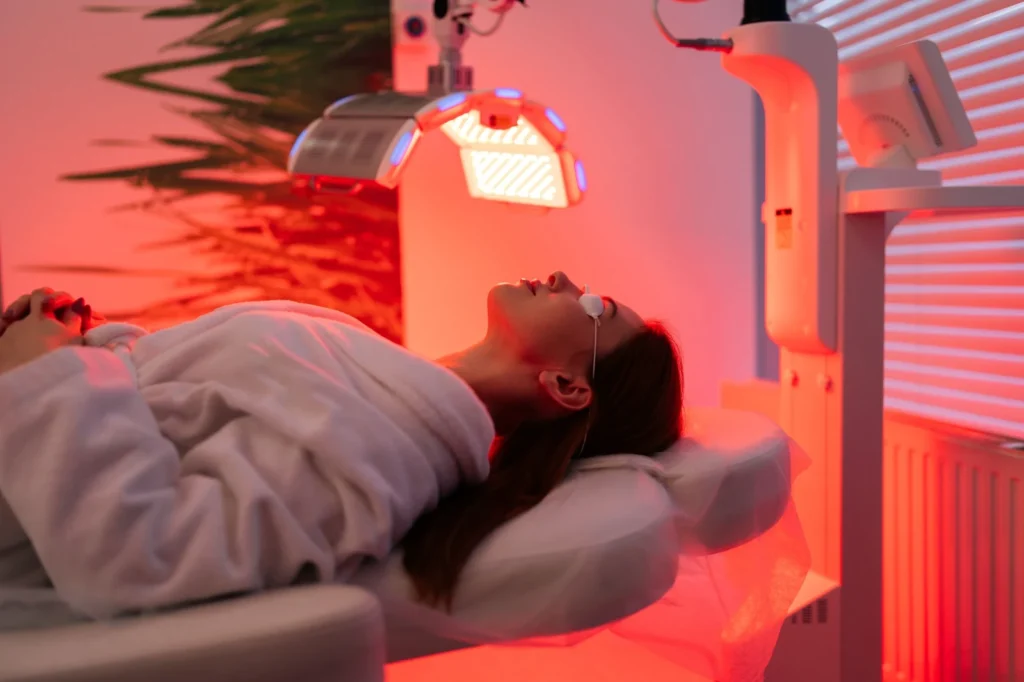
One of the most popular non-invasive treatments available today is LED light therapy. This gentle treatment uses specific wavelengths of light to target different skin concerns, including acne, inflammation, and skin rejuvenation.
Two of the most used wavelengths are red light and blue light. While both can benefit acne-prone skin, they work in very different ways.
What Is Blue Light Therapy?
Blue LED light therapy is specifically designed to target acne-causing bacteria on the skin’s surface.
The blue wavelength penetrates the skin and helps destroy the bacteria responsible for many inflammatory breakouts. By reducing bacterial activity, blue light can help decrease active acne lesions and prevent future breakouts from developing.
Benefits of Blue Light Therapy
- Targets acne-causing bacteria
- Helps reduce active breakouts
- Supports clearer skin over time
- Non-invasive and painless
- No downtime after treatment
Blue light is often recommended for clients who are experiencing frequent breakouts, oily skin, or inflammatory acne.
What Is Red Light Therapy?
Red LED light therapy focuses more on healing and reducing inflammation within the skin.
Unlike blue light, red light penetrates deeper into the skin and works by stimulating cellular repair and promoting healthy circulation. This can help calm redness, support skin recovery, and improve the overall appearance of acne-prone skin.
Benefits of Red Light Therapy
- Reduces inflammation and redness
- Supports skin healing and recovery
- Promotes collagen production
- Helps improve post-acne marks
- Encourages overall skin rejuvenation
For clients dealing with acne-related redness, irritation, or lingering discoloration after breakouts, red light can be an excellent addition to their treatment plan.
Which LED Light Is Better for Acne?
The answer depends on the type of acne you’re experiencing.
If your primary concern is active breakouts caused by acne bacteria, blue light therapy is generally the most targeted option because it directly addresses one of the root causes of acne.
However, if your skin is inflamed, sensitive, or healing from recent breakouts, red light therapy can help calm irritation and support the skin’s natural recovery process.
In many cases, the most effective approach is combining both red and blue light therapy. Blue light helps reduce acne-causing bacteria, while red light helps soothe inflammation and promote healing. Together, they create a comprehensive treatment that addresses both the cause and the visible effects of acne.
Achieve Clearer, Healthier Skin
Every client’s skin is unique, which is why a personalized approach is essential when treating acne. During your consultation, we’ll evaluate your skin concerns and recommend the most appropriate combination of treatments to help you achieve your skincare goals.
Whether you’re struggling with active breakouts, inflammation, or post-acne redness, LED light therapy may be the perfect addition to your skincare journey.
Schedule your appointment today to learn how red and blue LED light therapy can help you achieve clearer, healthier, and more confident skin.